Prompting Principles That Don't Expire
Prompt libraries go stale. Principles don't. Here's the durable way to get great output from any model.
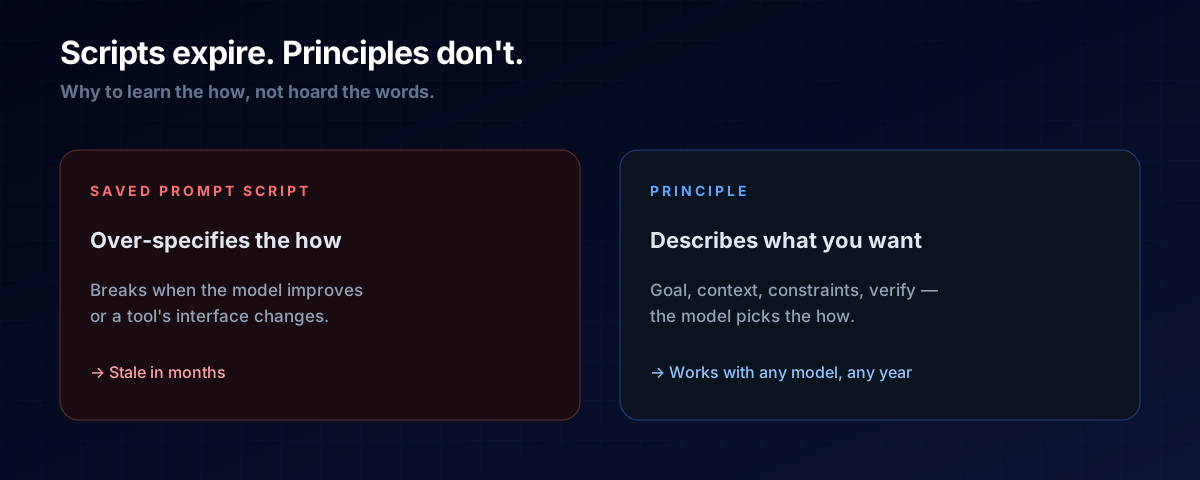
There's a whole industry selling "1,000 ultimate prompts." Skip it. Memorised prompt scripts were a crutch for weaker models — and they break the moment a model improves or a tool's interface changes. What lasts are principles: a way of communicating that works with any model, today and next year.
Why Prompt Libraries Go Stale
A rigid prompt over-specifies how to do something. As models get better at filling gaps on their own, that rigidity starts to fight the model and produce worse, not better, results. Principles describe what you want and let the model choose the how — which is exactly what modern models are good at. (See What Is an LLM for why.)
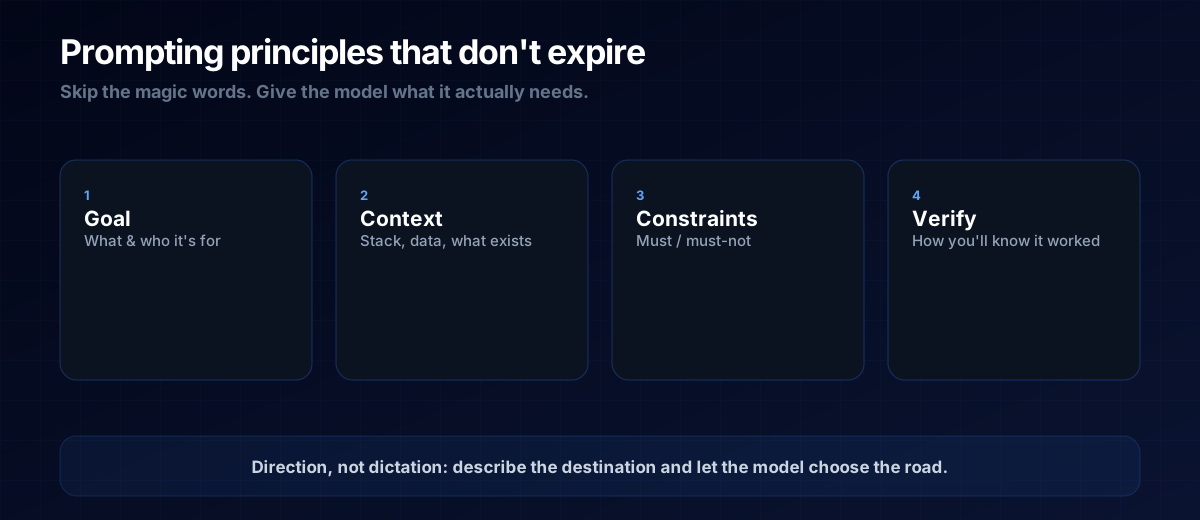
The Four Principles
- Goal — state what you want and who it's for, in one or two sentences. Ambiguity here is where most bad output comes from.
- Context — give the model what it can't guess: your stack, your data, what already exists, examples of the desired output.
- Constraints — the must and must-not. "Keep it free to run." "No external libraries." "Don't hard-code the key."
- Verify — say how you'll judge success, then actually check it (see How to Check AI-Written Code).
THE ONE-LINE VERSION
Direction, not dictation: give the model a goal, the context, the constraints, and a way to verify — then let it solve.
A Few Habits That Help
- One good example of the output you want is worth a paragraph of description.
- Iterate in small steps. Get one thing working, commit it, then ask for the next.
- Describe symptoms, not fixes, when something breaks.
- Ask it to explain anything you don't understand — in plain English.
The Old Prompt Library, Reframed
We used to publish fixed prompt scripts. They're now better understood as starting briefs: adapt them to your specifics rather than reciting them. The blueprints carry example briefs in this spirit — start with the Micro-Tool Empire.
A: As a starting point, sure. Just treat it as a draft brief to adapt, not a magic incantation to copy verbatim.
A: Yes — goal, context, constraints, and verification work for writing, analysis, and planning just as well as for code.
The Prompt Template
Turn any saved "magic prompt" into a durable, principled brief by rewriting it into this skeleton:
Goal: <what I want and who it's for>.
Context: <stack, data, an example of the output I want>.
Constraints: <must / must-not>.
Verify: <how I'll judge success>.
Work in small steps and explain anything I should understand.
Next Steps
Go deeper on the mindset in How to Brief an AI, then verify like a pro with How to Check AI-Written Code.