Library vs Framework: What's the Difference?
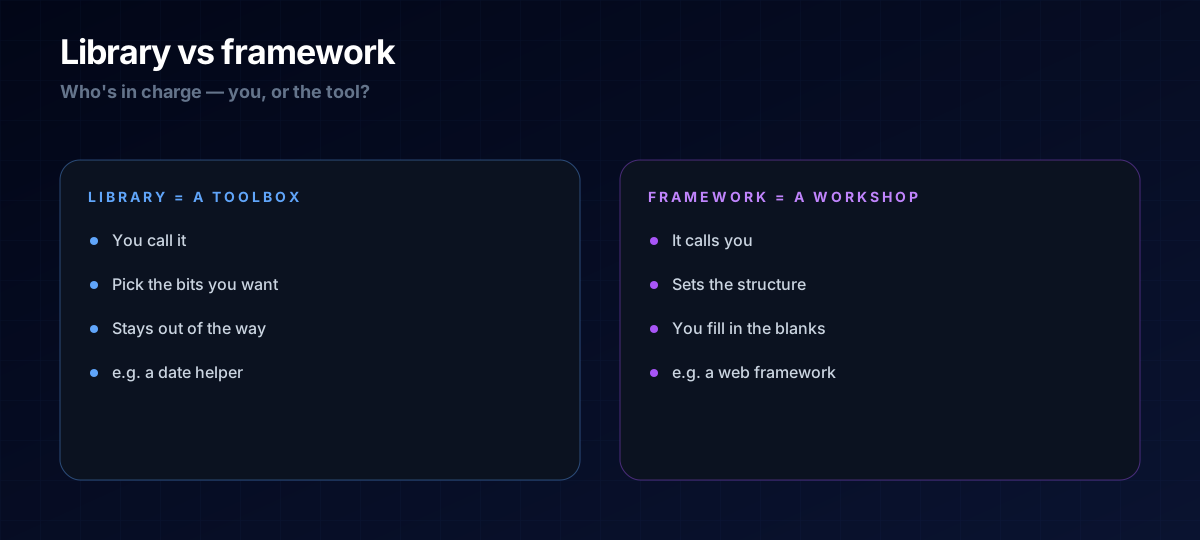
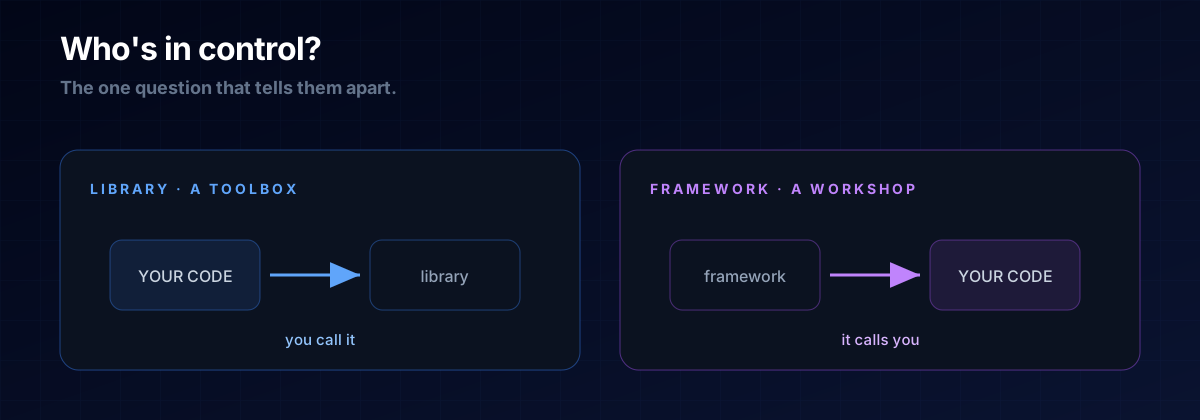
The difference comes down to one question: do you call the code, or does the code call you?
People throw around "library" and "framework" as if they're interchangeable. They're not — and the difference is genuinely useful when you're deciding how to build something or telling an AI what to use.
A Library Is a Toolbox
A library is a collection of ready-made functions you reach for when you want them. Need to format a date? Call the date library. You are in control — you decide when and how to use each tool, and the rest stays out of your way.
A Framework Is a Workshop
A framework sets up the whole workspace and structure for you. It decides where things go and calls your code at the right moments — you fill in the blanks. This is called "inversion of control": the framework is in charge, and you work within its conventions.
THE ONE-LINE VERSION
You call a library; a framework calls you. Library = freedom and small scope. Framework = structure and speed for bigger projects.
Which Should You Use?
For a tiny tool, a library (or no extra tooling at all) is often plenty — less to learn, less to break. For a larger app with many moving parts, a framework's structure saves you from reinventing everything. When in doubt, start as simple as possible and add a framework only when the project genuinely needs one.
A: Absolutely — most do. You build inside a framework and reach for libraries to handle specific jobs within it.
A: Not really. Describe your goal and constraints to your AI assistant and let it suggest the lightest option that fits. You can always add structure later.
The Prompt Template
Let the AI right-size the tooling instead of guessing:
I'm building <thing>. Suggest the LIGHTEST option:
no extra tooling, a single library, or a framework — and why.
Don't add a framework unless this genuinely needs one.
Next Steps
For many small, profitable projects you need neither — see What Is a Static Site for the simplest possible setup.