How to Check AI-Written Code (Without Reading Every Line)
Verify behaviour, not syntax. A five-step routine that keeps AI-built projects safe and working.
The fear that stops most non-techies is "how do I know the AI's code is any good if I can't read it?" Good news: you don't verify code by reading every line — you verify it by checking what it does. Here's the routine.
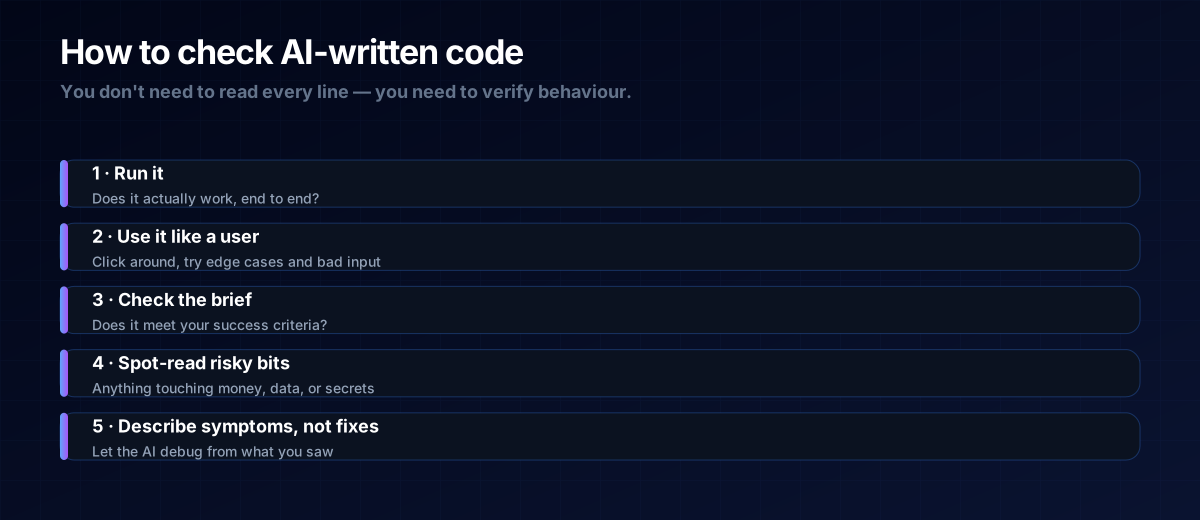
1. Run It
The first test is the simplest: does it actually work, start to finish? A lot of problems surface the moment you try the thing for real.
2. Use It Like a User Would
Click around. Then try to break it: empty inputs, huge numbers, weird text, the wrong order of steps. Real users will, so you should first.
3. Check It Against Your Brief
Go back to the success criteria from your brief. Does it do what you actually asked? "Looks done" and "meets the criteria" are different things.
4. Spot-Read the Risky Parts
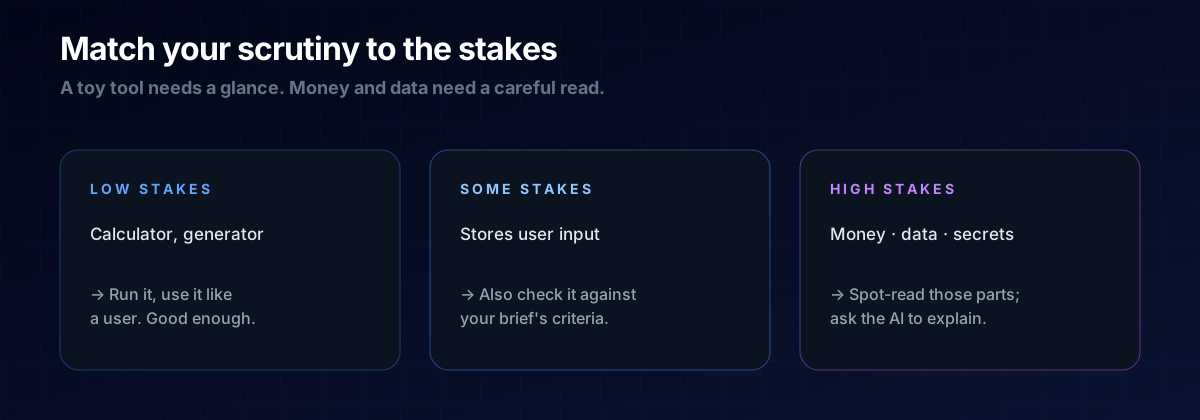
You don't need to read everything — but do glance at anything touching money, personal data, or secrets. Confirm keys come from environment variables, not hard-coded. Ask the AI to explain any block you're unsure about, in plain English.
5. Report Symptoms, Not Fixes
When something's off, describe what you saw ("the total is wrong when the tip is 0%"), not how to fix it. The AI debugs better from a clear symptom than from your guess at the cause — remember, it predicts rather than knows.
THE ONE-LINE VERSION
Run it, abuse it like a user, check it against your brief, spot-read the risky bits, and describe symptoms when it breaks. That's verification.
A: Only if you skip verification. For small, low-risk tools, behaviour testing plus a glance at sensitive parts is enough. Raise your scrutiny as the stakes rise.
A: Commit each version that passes your checks. That way your version history is a trail of known-good snapshots you can always return to.
The Prompt Template
Turn the AI into your second pair of eyes before you ship:
Before I ship this, help me verify it.
1. List the edge cases I should test as a user.
2. Point out anything that touches money, data, or secrets.
3. Explain those risky parts in plain English.
Next Steps
Pair this with a clear brief and a safety net of version control, then build for real with the Micro-Tool Empire blueprint.